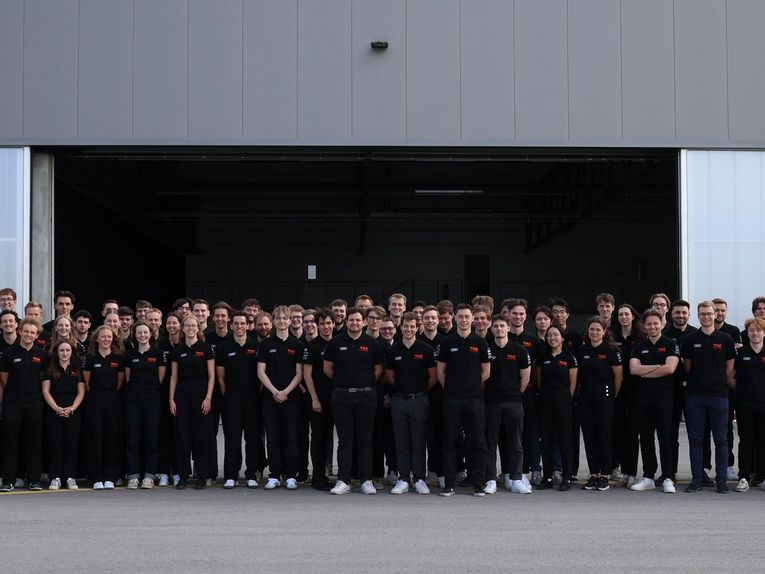
At three computer workstations, students are intensely calculating. Some are optimizing the 3D model of a rear wing, others are discussing battery data, and the sketch of a race car chassis can also be seen on one of the monitors. Welcome to the TUfast Racing Team: on the gallery level of the Mechanical Engineering building at the Technical University of Munich (TUM), students have been tinkering with an electric race car since September. “Every autumn, a new TUfast Racing team forms, some students leave after the racing season, others join,” says Julius Nasch, who studies automotive engineering and, together with two technical directors, manages the racing crew this year. He coordinates various working groups responsible for designing and developing parts or the motor, building the body, conducting tests on model xb026, planning project financing, approaching sponsors, and organizing the racing events starting in the summer. Nasch ensures that schedules are met, costs stay under control, and he steps in wherever help is needed. “Right now, around 100 people are working on developing and building our car.” As the racing season approaches in May and runs through late August, the workload increases. Presentations, business plans, and marketing materials must be created, along with repairs, further vehicle optimization, and additional test drives.
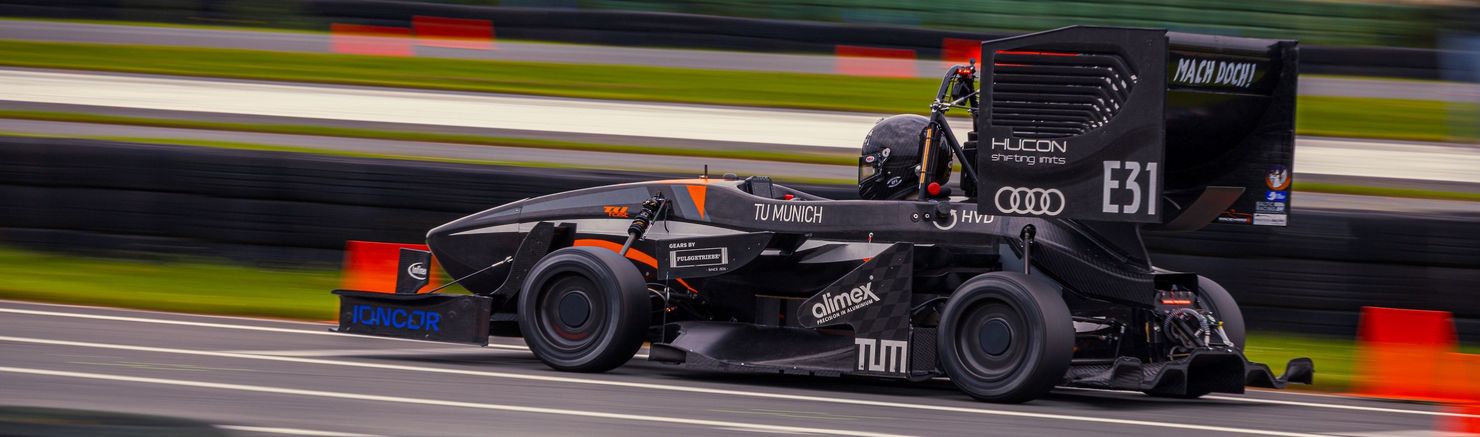
Work on the xb026 is still in full swing, but the previous version of the race car was equipped as follows:
• Four electric motors, each with 35 kilowatts (kW). Total power output: limited to 80 kW, with power distribution via torque vectoring
• Battery: 600‑volt maximum voltage and around 6 kilowatt-hours (kWh) capacity
• Carbon-fiber monocoque in lightweight construction; the car weighs around 161 kilograms in total
• Acceleration 0–100 km/h: approximately three seconds
• Top speed: about 120 km/h
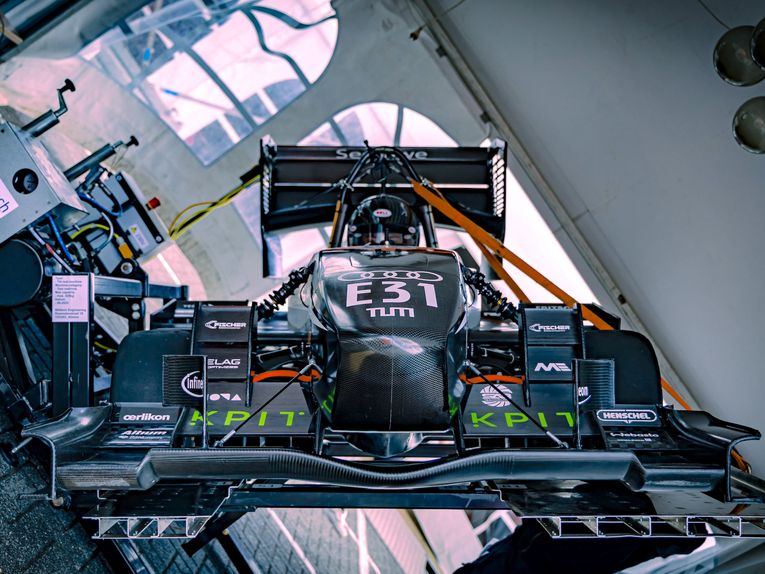
The student club TUfast Racing has existed since 2002 and has since participated in various Formula Student competitions: in recent years with a self-built and continuously optimized race car capable of running fast laps both with and without a driver. To enhance participants’ learning experience, the international racing series changes its regulations every year: “That changes the car every year,” explains Mathew Mashkov, who spent four years with TUfast Racing, most recently focusing on aerodynamics and now preparing his mechanical engineering bachelor’s thesis while advising the team and his successor, Benjamin Schelling. “These may be iterative changes, but they still have major implications for the design and require completely new calculations.”
For the 2025/26 season, Formula Student introduced, among other rules, a rear wing 10 centimeters lower, affecting handling and aerodynamics and requiring “a comprehensive redesign of the entire aerodynamics package,” says Nasch. TUfast Racing also intends to cool its four 35 kW electric motors directly with water in the future, in order to increase power density and dynamics: this too requires significant development and planning effort — particularly as most students work on the racing project alongside their studies. “Each working group manages one component,” Nasch explains. Twelve team leads are responsible for aerodynamics, design, construction, and other technical topics: “At the start of the season, we usually have far more ideas than we can implement. Because of time and cost limit, we have to evaluate and prioritize, what we can change at once. That’s how we develop a concept for a fast car that is coherent, powerful, and feasible.”
For their machine, the students rely on lightweight construction and a carbon fiber monocoque, whose concept and optimization also use the High Performance Computing (HPC) resources of the Leibniz Supercomputing Centre (LRZ). At the CoolMUC supercomputer, the chassis and aerodynamic components are modeled and simulations of the new cooling system and thermal loads in the motors are run. “If they have a good concept, student research groups can get exceptional access to the Linux cluster,” explains Thomas Frank, a PhD fluid mechanics specialist who leads the Computational X Support Team’s group for computaional fluid dynamics simulations (CFD) and has supported the TUfast Racing Team since 2022. “We also recommend our training sessions and introductory workshops to help them get started with efficient HPC more quickly, and we support them with simulation questions.”
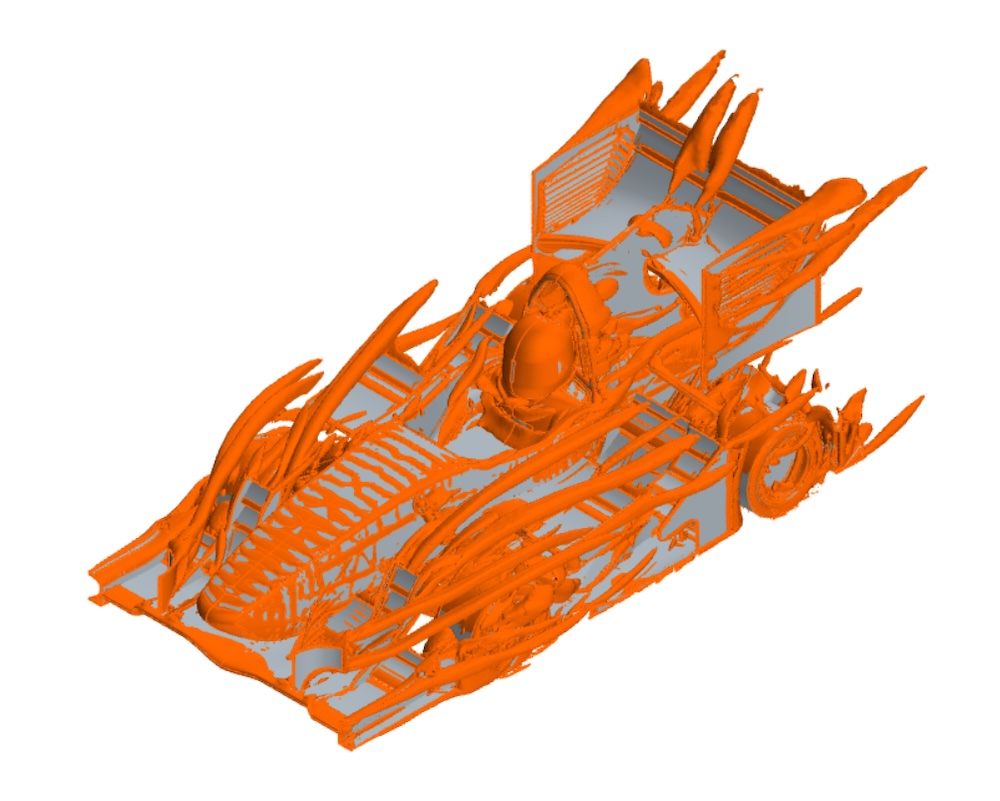
From autumn to early summer, the racing team uses CoolMUC to model and optimize their car’s aerodynamics. “On our laptops, we could only calculate individual components,” explains Schelling, who studies aerospace engineering and leads aerodynamics this year. “On CoolMUC, we can simulate the car’s entire aerodynamics, analyze different driving states, and extract far more information from the simulations.” They use Simcenter StarCCM+, a multiphysics simulation tool from Siemens’ Product Lifecycle Management suite. “Aerodynamics teams often use this software, so we installed it on CoolMUC,” Frank explains.
By the end of January, around 2,000 computing hours had been used for 500 simulations for the coming racing season. More HPC sessions will follow until the season begins. Simulations quickly generate data sets of around 150 gigabytes or more, overwhelming laptops and small cluster capacities. Therefore, Frank and his colleagues reserved a five-terabyte data container in LRZ’s Data Science Storage so that vehicle data and simulation results can be saved, processed, or recalculated. “The workflows at LRZ make a lot of things easier,” says Schelling, and Mashkov adds: “This also teaches us how to work with high-performance computers and solve many more questions.”
Computational fluid dynamics reveal turbulence and drag on front and rear wings, diffusers, and air intakes—factors that could cost critical lap time. The geometries can then be precisely optimized for better aerodynamics before the molds for carbon fiber parts are manufactured — crucial for maximizing downforce in fast corners. Additionally, heat flows between the motors, inverters, and the high-voltage battery can be modeled to optimally position cooling inlets and efficiently use the extremely compact installation space. This ensures that the 600-volt battery remains within its optimal temperature range even at maximum power: “You really have to know how to handle large data volumes and parallel computing, and understand what flow simulation software does,” says LRZ specialist Frank. “Without understanding the basics, you’ll just generate colorful nonsense and won’t be able to minimize or quantify numerical errors in simulations.”
From September to January, TUfast Racing calculates and designs; from then until April, they manufacture the components and conduct the first test drives and optimizations. In May, TUfast presents its new machine, which takes off in June. “Formula Student isn’t just about speed,” team manager Nasch emphasizes. “Winning a race isn’t necessary to win overall. Teams are also judged on how they develop technology, delegate tasks and responsibility, and manage costs.” Still, the dozens of trophies lining the shelves at TUfast fuel ambition: the team plans to compete in four races in 2026, aiming for top places and hoping to win the German competition at the Hockenheimring in mid-August: “It’s the toughest one, with strong competitors from Aachen, Stuttgart, Zurich,” says Nasch, laughing.
In the last season, the 161‑kilogram xb025 accelerated from 0 to 100 km/h in three seconds and reached a top speed of around 120 km/h. But the student's race cars are evaluated not just on speed; they must excel in acceleration events, maneuver safely through corners, endure a 22‑kilometer endurance run, handle driver changes and recharging — all of which test the self-developed technology. If the vehicle breaks down, only points for engineering, efficiency, concept and design, cost management, or business plan remain: “Formula Student is incredibly diverse — engines, materials, electronics, batteries, plus management and teamwork — and it’s fun. Everyone can find their place,” says Mashkov, the racing veteran. Many students prepare for careers in mobility or motorsport through TUfast. The alumni and sponsor network helps both during races and later when entering the industry. But is motorsport still sustainable and relevant? “Outside racetracks, the car doesn’t provide much value,” Nasch admits. “But lightweight carbon construction is used in the auto industry and aerospace for sustainability. Electronics, battery management, charging — these are practical issues becoming more important everywhere. Last year I joined just for fun, and decided that I want to do it properly once — with everything that goes with it.” (Autorin: vs | LRZ)
• The student club at the Technical University of Munich was founded in 2002 by five students
• Today, TUfast is divided into three teams: TUfast Racing focuses on e‑mobility and autonomous driving; the Eco Team specializes in long‑distance efficiency vehicles; the Moto Team develops fully electric motorcycles.
• The composition of the teams changes every year. In addition to engineering students, those from business and finance are also in demand.
• Participants should invest at least 10 hours per week; team leaders make use of exam‑light periods or take a semester off. Maximum participation duration: 5 years.
• Sponsors support the initiative by providing materials, services, and financial resources.
• The team online: tufast.de; https://tufast-racingteam.de
• The Formula Student Germany (FSG): www.formulastudent.de